Known for its rich musical and artistic traditions, the city has always been cosmopolitan and welcoming. Merchants from all across Europe, who came to Leipzig for the trade fair, and a large number of students would all rave about the city's pubs and inns. Johann Wolfgang Goethe, once a student in the city himself, immortalised Auerbachs Keller in his play "Faust". With its "Großer Keller" (Large Cellar), the restaurant now numbers among the most famous restaurants in the world. Yet, the sophisticated cuisine available in the "Historische Weinstuben" (Historic Wine Bar) that is the oldest part of Auerbachs Keller is still an insider tip for many. Over the past few years a good number of Leipzig restaurants have cooked their way into gastronomical stardom, especially FRIEDA and Stadtpfeiffer. Stadtpfeiffer is located, in the Gewandhaus concert hall, it has boasted a Michelin star and 17 Gault Millau points for years. FRIEDA, an award-winning gourmet restaurant since 2021, also knows how to convince with selected products and finely balanced contrasts. You really do feel close to the stars in the Panorama Tower Restaurant, which is high up on the 29th floor of the City-Hochhaus in the Augustusplatz square. It's worth a visit, not just for the wonderful panoramic views over the city from a height of 110 metres, but also for the cuisine, which is modern and daring.
The Saxon love of coffee
Coffee enthusiasts will love the city's traditional coffee houses. The "Zum Arabischen Coffe Baum" café-restaurant is the oldest coffee house in Germany – none other than Robert Schumann was a regular patron here. It is named after a sculpture above the entrance portal which dates from the year 1720 and remains well preserved today. The third floor of the building houses a coffee museum, with over 500 exhibits featuring the popular beverage. Due to major renovations, the café “Zum Arabischen Coffe Baum” is currently closed until further notice. Many visitors are first attracted to the Kaffeehaus Riquet by the two large elephant heads above the entrance, but the coffee house makes a more lasting impression with its excellent selection of coffees and cakes. Another culinary must for the visitor to Leipzig is sampling a cup of Bach coffee in the Café Kandler by St Thomas Church.
Leipzig Specialties
The large variety of Leipzig specialities reflects the high standard of living enjoyed for centuries by the people of Leipzig in comparison with the surrounding areas. The best-known delicacy is a hearty vegetable dish known as "Leipziger Allerlei". The traditional handed-down recipe calls for morels, prawns and bread dumplings along with various baby vegetables like carrots, kohlrabi, asparagus and cauliflower.
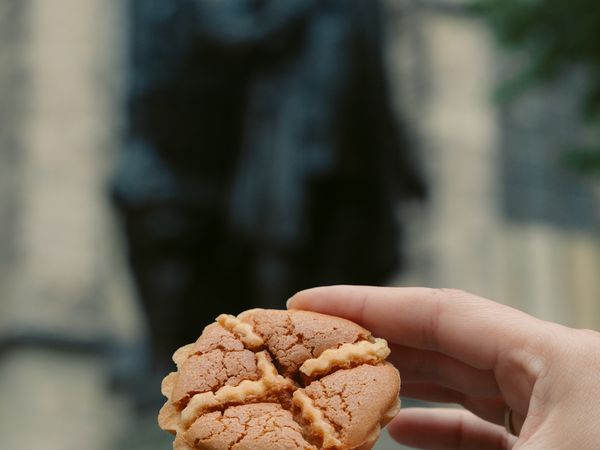
The "Leipziger Lerche" is a tasty dessert that is popular in the city and far beyond. When the hunting of larks for pie-making was banned by the King of Saxony in 1876, the inventive bakers of Leipzig immediately came up with a substitute for the popular delicacy: using shortcrust pastry, almonds, nuts and marzipan they made imitations of the song bird's nest. They cleverly added a dollop of strawberry jam inside to symbolise the lark's heart.
The original Bachtaler chocolate candy are an excellent gift idea. They were created in the year 2000 by the patissier René Kandler to mark the 250th anniversary of the death of Johann Sebastian Bach. The Bachtaler is an exquisite confection made of chocolate-coated ganache containing a coffee bean enclosed in hazelnut pastry. By contrast, Leipziger Räbchen are rather reminiscent of doughnuts. They are always freshly prepared and served warm. The Räbchen are made of prunes filled with marzipan and pressed into a pancake mix, then shaped into balls and rolled in cinnamon sugar. For those who prefer something more substantial, there are the classics, like Saxon potato soup, a succulent roulade, or Mutzbraten, a speciality of Thuringia and Western Saxony: a fist-sized piece of pork neck or shoulder marinated with spices and slowly cooked on a special birchwood grill, the “Mutzbratenstand”.
Drinks with tradition: Leipzig Gose and Allasch
For a refreshing drink with a 1,000-year tradition, try the Leipziger Gose beer. This top-fermented beer had almost faded into obscurity before being rediscovered by a resourceful publican. Now it is being brewed in Leipzig again. For extensive information about this popular Leipzig beverage, you should go to the Gasthaus- & Gosebrauerei “Bayerischer Bahnhof” (a brewery inn at the Bavarian Railway Station) or the “Ohne Bedenken” pub in the Gohlis district of Leipzig. At both places you can drink a Gose in a beautiful beer garden, which are very popular especially in the summer months. To aid digestion, you can try the popular Leipziger Allasch, a strong liqueur made from caraway seeds or “Leipzig’s favourite gin”, the LongHorn.
Places to eat and drink
Since 1989, many streets have been developed in the city specialising in restaurants and pubs – each with its own special charm. The beating heart of the city centre is along the "Drallewatsch" around the Barfußgässchen. The interesting German name comes from an expression in Old Saxon dialect meaning to experience something or to go dancing. The Barfußgässchen is known for the variety of restaurants and bars that also offer plenty of outdoor seating.
Just a few yards to the west, in Gottschedstraße, there are large numbers of trendy bars and pubs featuring international cuisine, tasty "after work" cocktails and regular live music. Presumably, this is due to the influence of the nearby Central Theatre. In Karl-Liebknecht Straße you can find good food from all over the world from early in the morning until late in the evening. It runs from the centre through Südvorstadt to the left-wing alternative district of Connewitz. Around the Karli, as it is called by the locals, there are many cafés, restaurants and bars where people talk about the city, remember the wild days of youth or try to revive them: The nightlife in this part of the city is legendary! For the perfect way back to the city centre, it is worth taking a closer look at the small Münzgasse. Over its short length, it houses an impressive selection of eateries and charming pubs. If you are looking for a wide selection of international delicacies, you will find them on Eisenbahnstraße in the east of the city. The street stands for cultural diversity in Leipzig - when walking along Eisenbahnstraße it is hard to decide where to eat.
In the west of the city, it is worth taking a detour to the alternative district of Plagwitz, especially to Karl-Heine Straße. More and more restaurants, cafés and small stores have been spreading out there for a few years. You can find Vietnamese and Italian restaurants as well as a Mexican restaurant and sushi. The street is right next to the Karl Heine Canal and no matter what time of day it is, there is always something going on.
Further Information
www.leipzig.travel/en