© www.pkfotografie.com, Philipp Kirschner
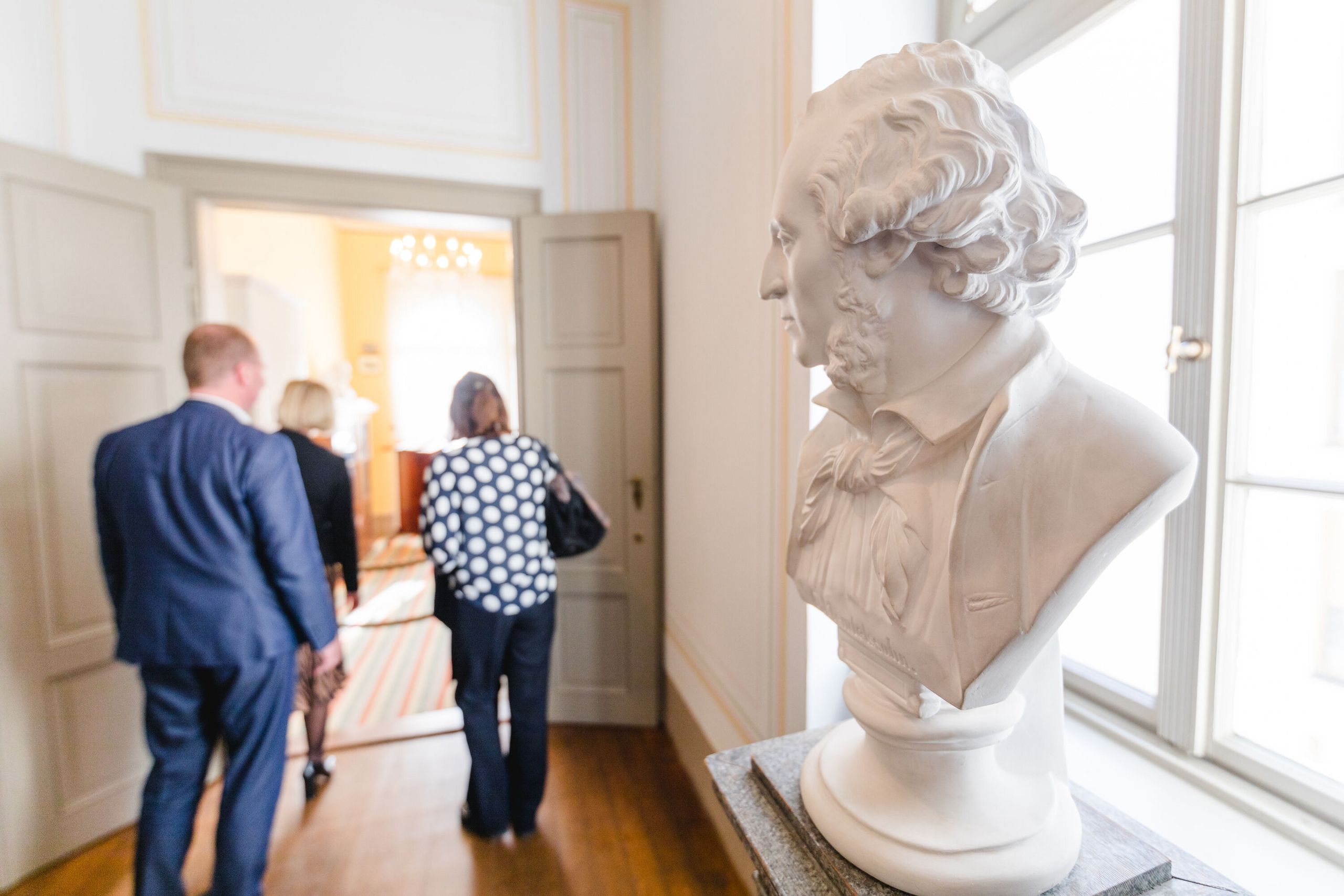
Besucher der Musikstadt Leipzig bei einem Rundgang durch das Mendelssohn-Haus Leipzig
© www.pkfotografie.com, Philipp Kirschner

Over the past centuries, more than 500 composers have lived and worked in Leipzig, including major figures in music history such as Johann Sebastian Bach, Felix Mendelssohn Bartholdy, as well as Clara and Robert Schumann. Personalities like Richard Wagner, Max Reger, Edvard Grieg, Albert Lortzing, Gustav Mahler, and Hanns Eisler also shaped the city's rich musical landscape.

Their influence is still noticeable today and is reflected in authentic places that allow visitors to immerse themselves in their world. The Leipziger Notenspur is an impressive example of how the history and legacy of these composers are kept alive in the city.

Johann Sebastian Bach

City Music Director and Thomaskantor of Leipzig

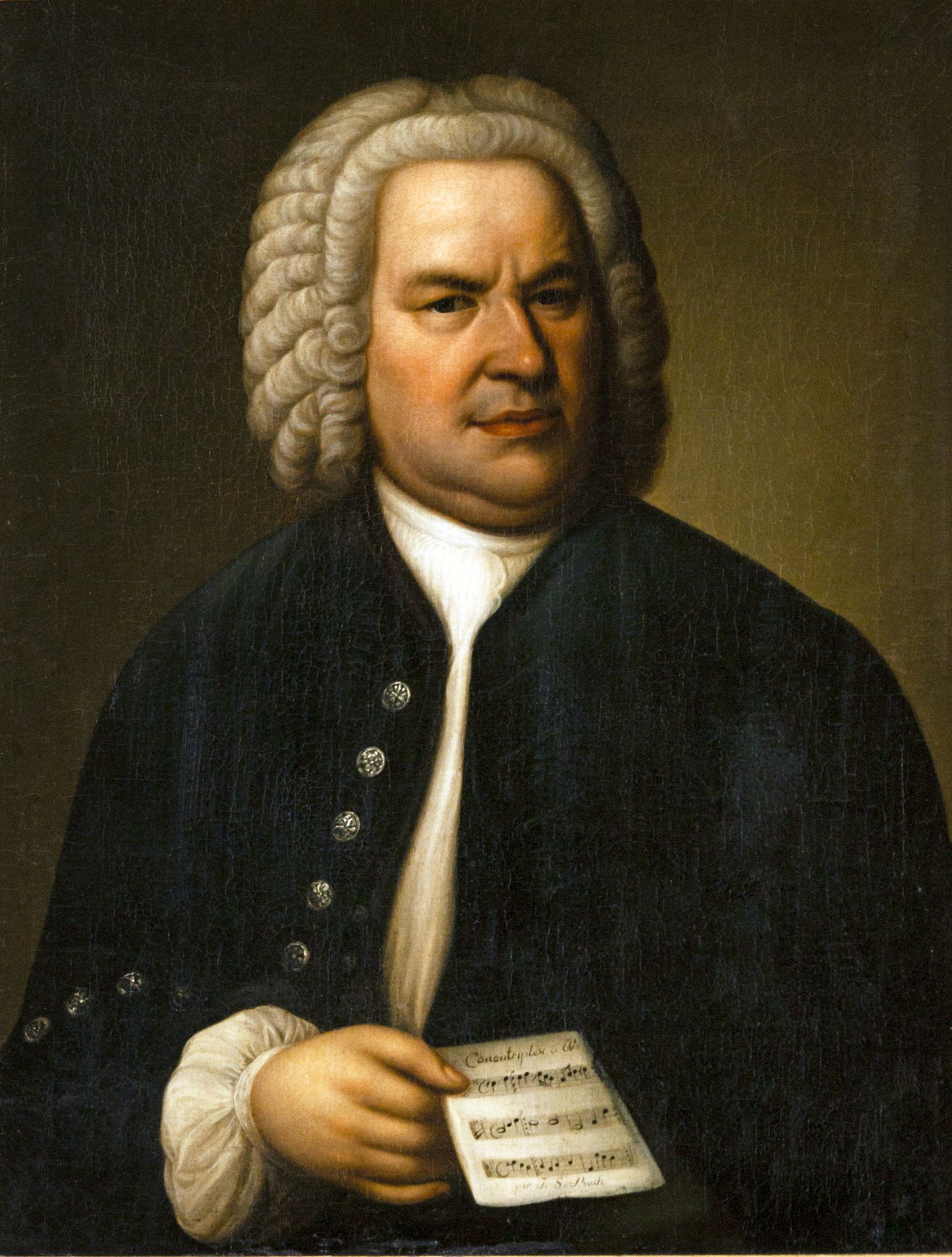
Portrait des berühmten Komponisten Johann Sebastian Bach der einige Jahre in Leipzig gelebt und als Thomaskantor den Thomanerchor in der Thomaskirche geleitet hat
© Sepp Beck

Bach worked in Leipzig from 1723 until his death in 1750. During this time, he was responsible for church services and special religious festivities at the Nikolaikirche as well as the Thomaskirche .

Furthermore, as the city's "Director musices” (Music Director), he was responsible for organizing a wide range of secular affairs. For many years, Bach directed the Collegium musicum, an association of professional artists and music-making students. He was also invited to numerous cities for organ inspections, where he showcased his virtuoso skills.

Many significant compositions by the Thomas Cantor were created in Leipzig, including several annual cycles of sacred cantatas, the St. John and St. Matthew Passions, the Christmas Oratorio, “The Art of Fugue,” and the Mass in B Minor. Since the 19th century, Leipzig has undertaken extensive efforts dedicated to the study and interpretation of Bach's works. In this context, several institutions, societies, and competitions were founded.

Do you want to learn more about the famous composer? Then be sure to visit the Bach Museum. Here you can gain deep insights into the life and work of Johann Sebastian Bach in Leipzig. Or visit the Leipzig Bachfest, with which the city of Leipzig honours the distinguished Thomas Cantor in a special way every year.
Bach locations in Leipzig

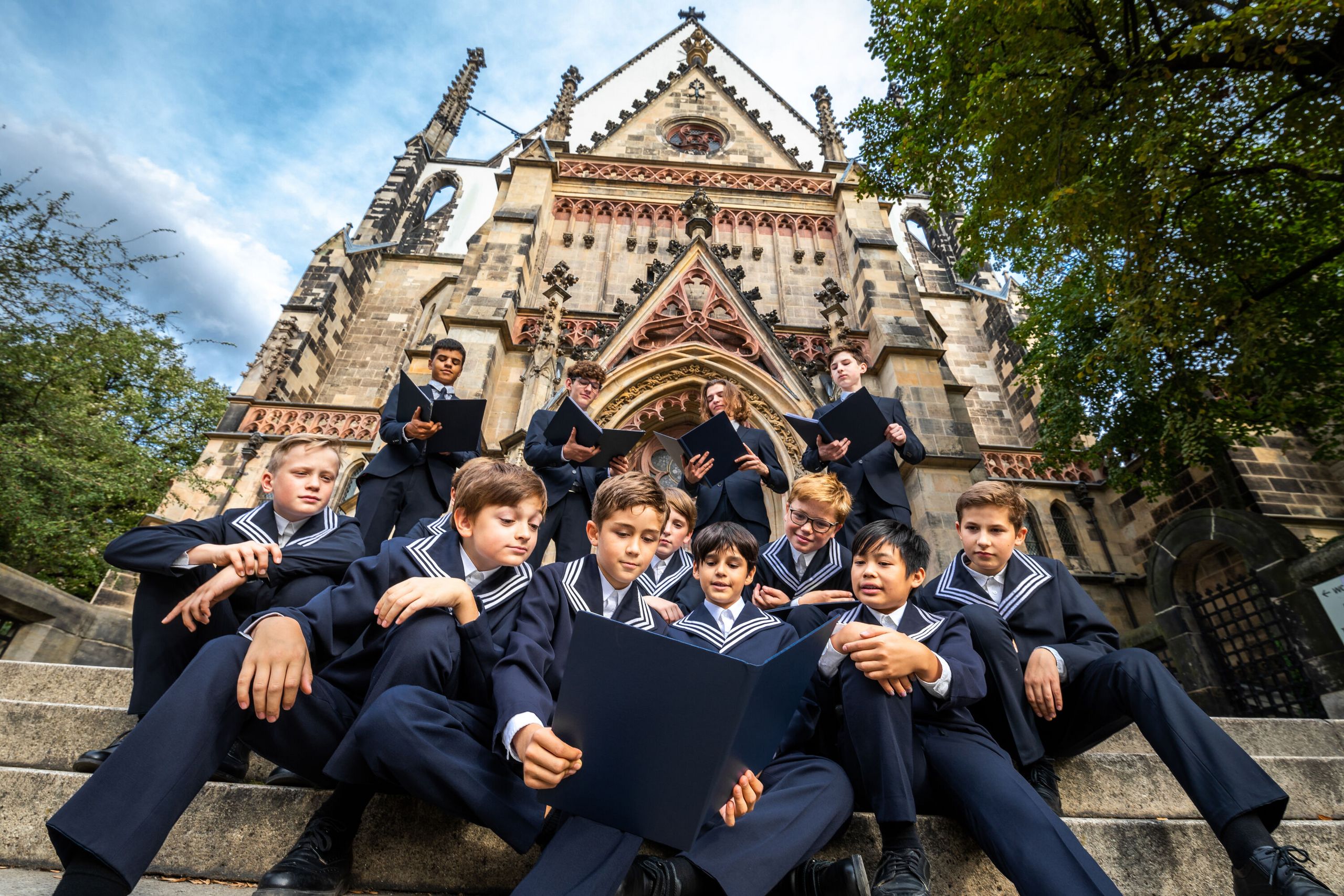
Thomanerchor Leipzig - History and performances

Der Thomanerchor Leipzig - hier zu sehen vor einer seiner Spielstätten, der Thomaskirche.
© www.pkfotografie.com, Philipp Kirschner

The origins of musical life in Leipzig date back to the year 1212. At that time, Margrave Dietrich appropriated a place of worship and donated it to the power-seeking Augustinian Canons. The associated collegiate school initially had the task of training boys in liturgical singing. From this, the St. Thomas Choir later emerged.

The structure of the most famous German boys' choir, which was led for 27 years by Johann Sebastian Bach, has remained unchanged for 800 years. The motets and cantatas performed weekly are extremely popular with music lovers.

Performances in the St. Thomas Church

  • Fridays: 6:00 p.m. to 7:00 p.m., liturgical form of Vespers

  • Saturdays: 3:00 p.m. to 4:15 p.m., usually with the performance of a cantata by Johann Sebastian Bach

  • At the entrance, the purchase of an admission program for 3 euros per person is required, and it is well worth it.

© www.punctum.net

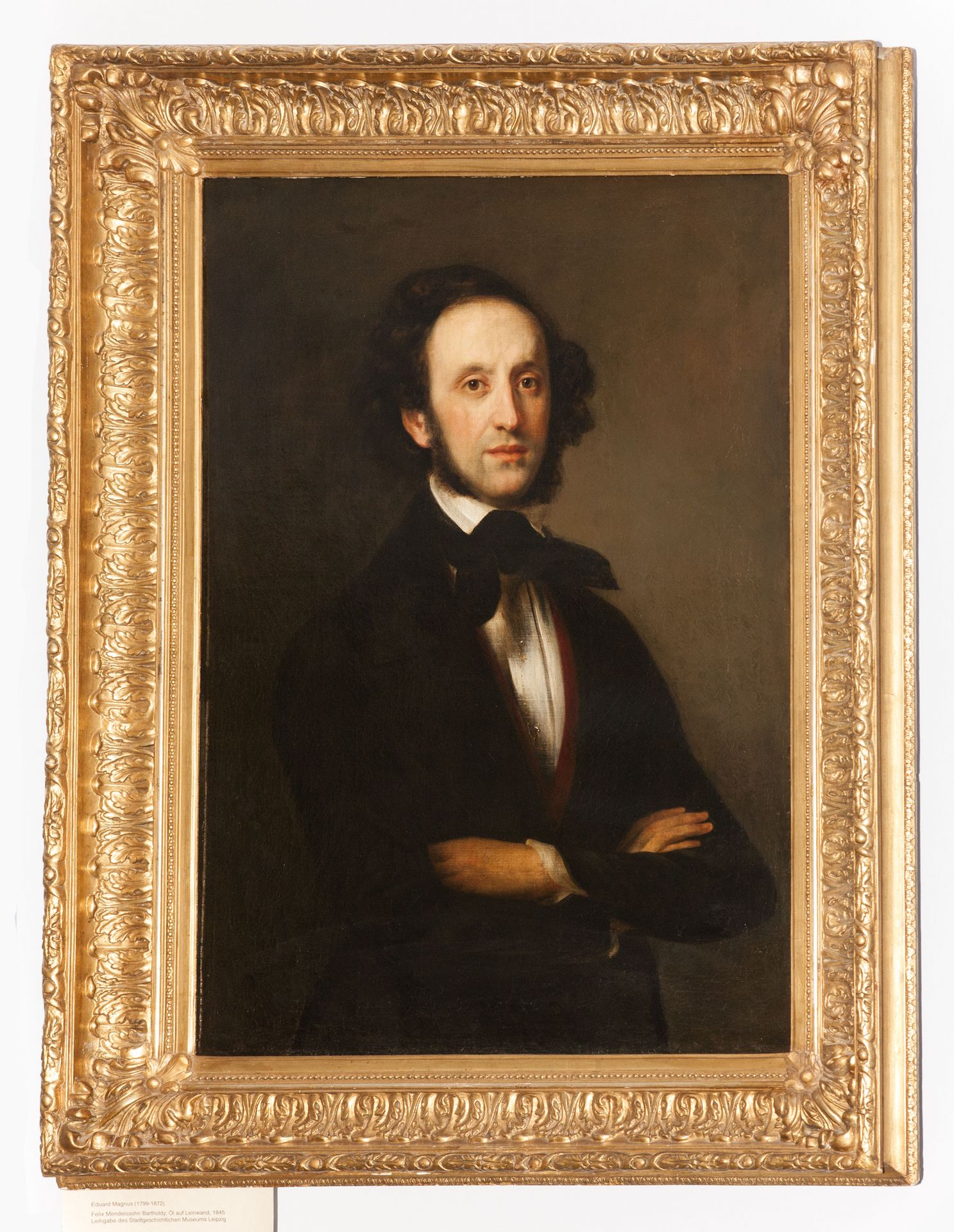
Felix Mendelssohn Bartholdy

Portrait des Komponisten Felix Mendelssohn Bartholdy der in der Musikstadt Leipzig gelebt hat und Gewandhauskapellmeister war.
© Sepp Beck

Felix Mendelssohn Bartholdy, born on February 3, 1809 in Hamburg, was the grandson of the philosopher Moses Mendelssohn. He is one of the most impressive figures in international musical life and is considered the most important Leipzig Gewandhaus Kapellmeister. He fundamentally reformed the city’s musical life and initiated the Bach Renaissance in Germany.

On February 1, 1827, the premiere of his Symphony in C minor was performed at the Gewandhaus for the first time. At the end of August 1835, Mendelssohn Bartholdy, then 26 years old, came from Berlin to Leipzig to take up the position of Gewandhaus Kapellmeister as the successor to the dismissed Christian August Pohlenz. During his 12 years in Leipzig, he and Ferdinand David developed the Gewandhaus Orchestra into a powerful ensemble of European standing.

In addition, Mendelssohn is the founder of the oldest German music school. With the founding of the Leipzig Conservatory on April 2, 1843, he created essential prerequisites for more thorough training of young musicians. The first core staff included Ferdinand David, Moritz Hauptmann, Henriette Bünau-Grabau, and Robert Schumann.

The work and legacy of the great composer are honored annually during the Mendelssohn Festival.

Mendelssohn locations in Leipzig

Mendelssohn House Leipzig

Leipzig

www.pkfotografie.com, Philipp Kirschner | AI-optimized | CC-BY

Leipzig Gewandhaus

Leipzig

www.pkfotografie.com, Philipp Kirschner | AI-optimized | CC-BY

Facts about Felix Mendelssohn Bartholdy

  • 1827 Premiere of his Symphony in C minor at the Gewandhaus

  • 1835–1847 Gewandhaus Music Director

  • 1843 founding of the first German music conservatory

  • † 11/04/1847 Leipzig

© Andreas Schmidt

Welcome to Leipzig - The podcast for your Leipzig trip

All episodes

Clara and Robert Schumann

A musical artist marriage

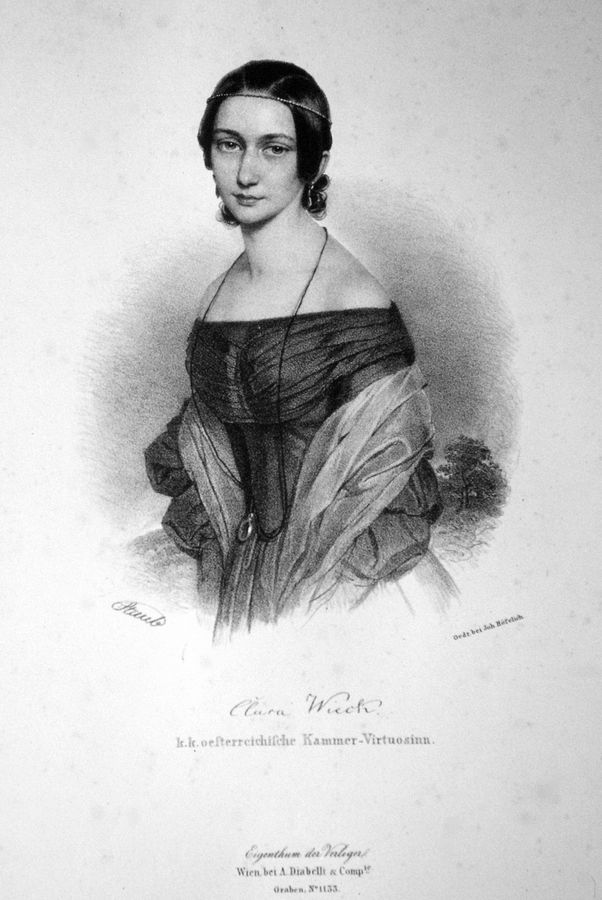
Clara Schumann, née Wieck

Leipzig’s most famous female musician

Portrait der berühmten Leipziger Komponistin Clara Schumann, gebürtige Wieck, die später Robert Schumann heiratete und als Klaviervirtuosin auch im Gewandhaus zu Leipzig gespielt hat.
© Andreas Staub

The daughter of the ambitious piano teacher and instrument dealer Friedrich Wieck is still the most famous female musician from Leipzig today. She was born in Leipzig on September 13, 1819, and received strict piano training from the age of five. At just nine years old, she performed for the first time at the Gewandhaus. By the age of 16, she was regarded as a pianist of European stature.

In October 1831, she performed for Johann Wolfgang Goethe in Weimar, who was full of praise. This was followed by numerous tours on which she interpreted works by Ludwig van Beethoven, Frédéric Chopin, Johannes Brahms, and Robert Schumann.

In 1828, she met the eighteen-year-old law student Robert Schumann. Schumann came to her father as a piano student and lived with the Wieck family in 1830/31. He fell in love with the young Clara, who returned his affection. Five years later, they became secretly engaged. On September 12, 1840, the celebrated pianist and the then unknown composer married in the Schönefeld Church and moved into their apartment at Inselstraße 18. There, they spent four happy and productive years.

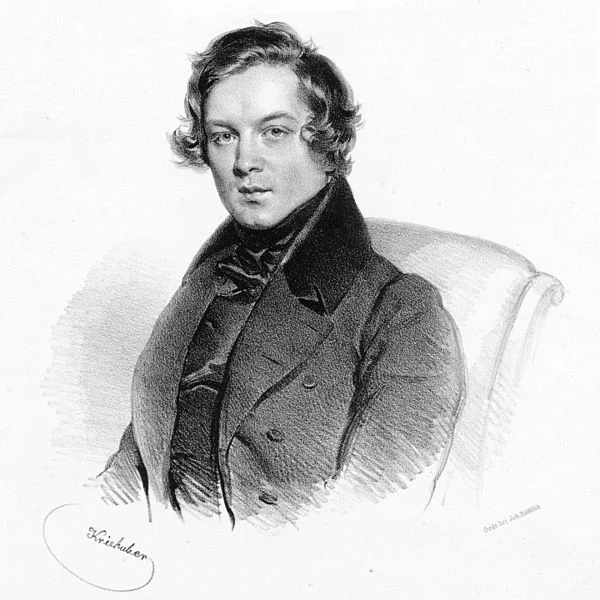
Robert Schumann

The epitome of a Romantic composer

Portrait des Komponisten Robert Schumann der zusammen mit seiner Ehefrau Clara Schumann in der Musikstadt Leipzig lebte.
© Joseph Kriehuber

Robert Schumann, born on 8 June 1810 in Zwickau, came to Leipzig in May 1828 to study law. The “old, famous, and beautiful city” became the melting pot of his self-discovery. After just one year, he abandoned his law studies and switched to music. He moved into the apartment of his piano teacher Friedrich Wieck and trained to become a pianist. It was there that he first met Clara Wieck, the nine-year-old piano-playing child prodigy.

In the spring of 1833, the overstretching of a tendon in his right hand, caused by excessive and incorrect practice, forced Schumann to devote himself exclusively to composition. His ideas for a new poetic style of composition were first reflected in piano works such as the “Abegg Variations, Op. 1”.

After his marriage to Clara Wieck on 12 September 1840 in the Schönefeld Church, the young couple moved into a late Classicist residence. Nowhere else in Leipzig was so much magnificent music created, nor did so many prominent artists gather. The wedding year became Schumann’s “year of song”. Around 150 piano songs were composed, including the cycle “Liebesfrühling”.

Following in the footsteps of Clara and Robert Schumann? 

At the Schumann House on Inselstraße, which was considered an important international meeting place for artists, you can gain an overview of the artistic development of Clara and Robert. The exhibition curated by Dr. Beatrix Borchard, which opened on September 14, 2019, at the Schumann House, is presented under the motto “Experiment Artist Marriage” and explores for the first time the shared life of an artist couple.

Schumann sites in Leipzig

© KOCMOC / Con spirito

Con Spirito

Leipzig chamber music festival

Con spirito, organised by The Schumann House Leipzig (Gregor Nowak, Executive Manager), takes place every year in September in Leipzig’s European Cultural Heritage Sites: Alte Nikolaischule, Bach Museum, Gewandhaus, Grieg Meeting Place, University of Music and Theatre Leipzig Felix Mendelssohn Bartholdy, Mendelssohn House, The Schumann House Leipzig and St. Thomas Church.

Richard Wagner

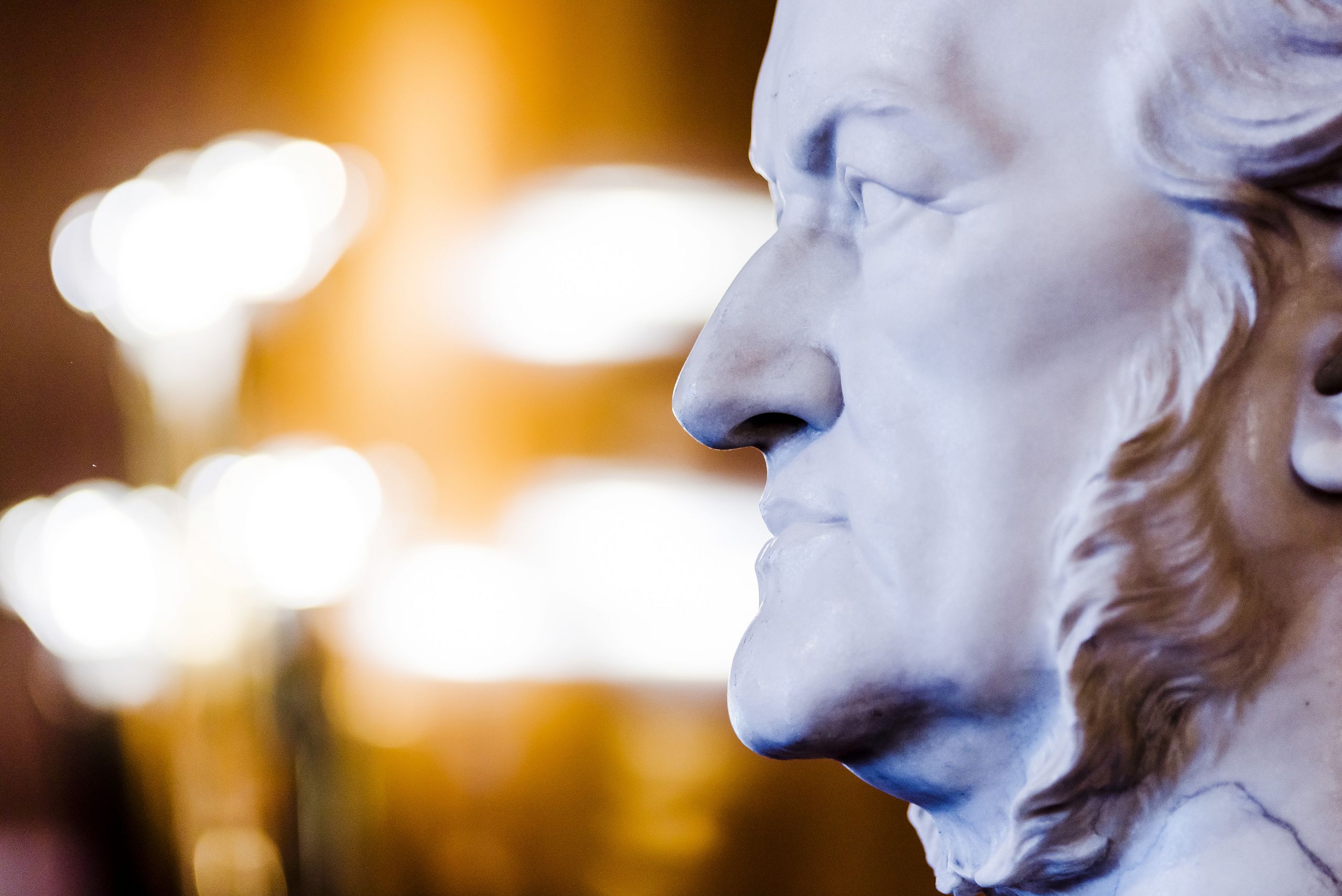
Seitliche Nahaufnahme der Büste des Leipziger Komponisten Richard Wagner
© www.kirstennijhof.de, Kirsten Nijhof

Richard Wagner, the most influential composer of the High Romantic era, was born on May 22, 1813, in Leipzig in the “House of the Red and White Lion” as the youngest of nine children. His birthplace at Brühl 319, later No. 1–3, was demolished in 1886. 

From June 1830, Wagner attended the Thomas School, which he left without completing his final examination. With the Gewandhaus musician Christian Gottlieb Müller, the young artist secretly received his first musical training in harmony. In order to devote himself entirely to student life and music, Wagner enrolled in February 1831 as “studiosus musicae” in the Leipzig University register. Shortly afterward, he became a pupil of the Thomas Cantor Christian Theodor Weinlig. Weinlig recognized Wagner’s musical talent and supported him. Wagner later expressed his admiration for Weinlig by dedicating his Opus I (Piano Sonata in B-flat major) to him. In 1843, he dedicated his choral work “The Feast of the Apostles” to his teacher’s widow.

At the Gewandhaus, Wagner became familiar with the nine symphonies of Ludwig van Beethoven and was inspired to compose a symphony of his own. He was 17 years old when, at the Comödienhaus at Christmas 1830, his music was performed in Leipzig for the first time with the B-flat major overture. Wagner’s music was first performed at the Gewandhaus in February 1832 (Overture in D minor).

Explore Leipzig - City Tours

Digital city tours through Leipzig

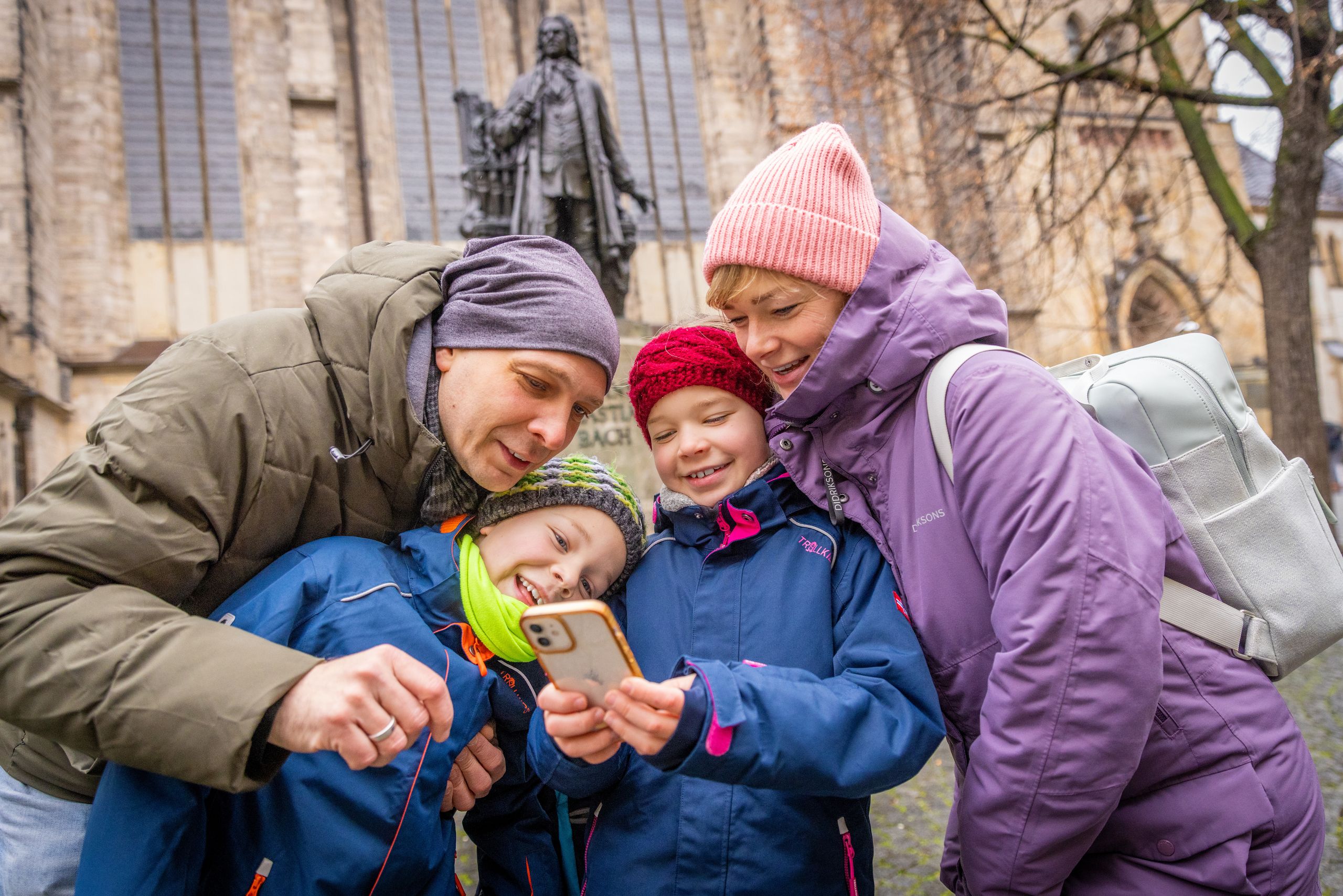
Eine Familie informiert sich über das Bach-Denkmal vor der Thomaskirche mithilfe der Explore Leipzig App.
© www.pkfotografie.com, Philipp Kirschner

With the Explore Leipzig App, you can discover the city's highlights easily and individually!

On a total of four interactive city tours, you will get a comprehensive overview of the city of Leipzig and learn many interesting facts and exciting background information during the different routes. You can choose between a large tour through the city centre, a highlights tour, a family tour, as well as four alternative tours through Leipzig’s trendy districts.

On the city centre tour “Leipzig on Foot”, you can discover, for example, the opera house, the Gewandhaus concert hall, St. Thomas Church and St. Nicholas Church, as well as the Old St. Nicholas School.

© www.pkfotografie.com, Philipp Kirschner

Leipzig Notenspur

A musical walk

Not only Bach, Mendelssohn, the Schumanns and Wagner lived and worked in Leipzig. Many others, such as Edvard Grieg, Albert Lortzing, Gustav Mahler and Hanns Eisler, also left their mark here.

Leipzig has a globally unique density of originally preserved places of activity of world-famous composers. The Leipzig Music Trail has been making this musical cultural heritage come alive since 2012 and connects the most important original sites in Leipzig’s city center along a route of 5.3 km. Curved steel elements embedded in the ground mark the band that winds through the inner city.

You can start and end the tour on foot at any station you like. At the stations, sound samples and information are provided in both German and English, offering exciting insights into Leipzig’s musical history. In addition, there is the Leipzig Music Trail Cycle Route with a length of around 40 km, the Leipzig Music Trail Arc west of the city center, and the Leipzig Music Trail Path through Leipzig’s parks and green spaces.

In the “Music Trails App”, you can experience not only the Music Trail tour but also other musical walks through Leipzig’s music history, including those dedicated to Bach, Clara and Robert Schumann, Mendelssohn and Telemann.

All tips on Leipzig’s female and male composers at a glance