Socio-cultural center Kulturbastion Torgau

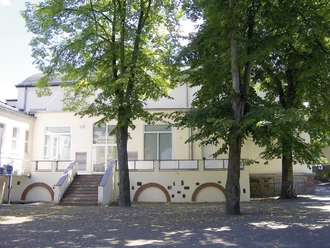
In 1809, Napoleon I decided to have a new fortress built on the Elbe. The main reason for this was to secure and fortify the Elbe line ahead of a possible Russian campaign. Torgau was ultimately chosen. The main structure of the Torgau fortress, whose construction began in 1810, consisted of eight bastions. These were fortified parts of the main rampart and had bomb-proof rooms, so-called flank casemates, in their lateral boundaries. One such flank casemate was today's Kulturbastion Torgau (right flank casemate of Bastion II).
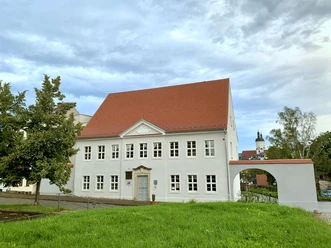
After Napoleonic rule, Torgau became Prussian property in 1815 and the bastion and fortifications were further expanded. The last building to be erected was a bomb-proof granary to the left of the flank casemate in 1877, which is now used as the offices of KAP Torgau e.V. In the second half of the 19th century, technical improvements were made to offensive weapons, making many fortresses less interesting from a military point of view. On 01.01.1893, the Prussian military handed over the fortress site to the town of Torgau.
In the 20th century, the flank casemate was used in a variety of ways. While it was still used as a weapons, provisions and refugee camp during the war, it was later used as a warehouse or misused as an illegal garbage dump. During the SED dictatorship, the building belonged to the premises of Kraftverkehrs Torgau.
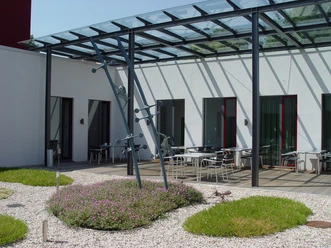
In November 2005, the Kulturbastion was ceremoniously handed over to KAP-Torgau e.V. by the mayor of Torgau. After two years of construction and with the help of the EU's ERDF program and the federal government's "Culture in the New States" development program, it was possible to convert the old Bastion II fortress in Torgau, which is a listed building, into a socio-cultural center. The KAP-Torgau was awarded the cultural prize of the Kulturpolitische Gesellschaft e.V. in 2005.
The association not only succeeded in establishing a socio-cultural center, but also in actively protecting historical monuments by renovating parts of the culturally and historically significant Torgau fortress. The concept has succeeded in sustainably combining socioculture, monument protection and cultural tourism.
The program includes cabaret and comedy, concerts, readings, exhibitions, a youth center and a digital 3D cinema. Today, the Kulturbastion is one of the cultural hubs in Torgau and the district of North Saxony. Thanks to the variety of programs on offer, it is visited by a broad section of the population. The interplay of architecture, program offerings and facilities make the Kulturbastion an architectural and cultural gem in the rural area.
After Napoleonic rule, Torgau became Prussian property in 1815 and the bastion and fortifications were further expanded. The last building to be erected was a bomb-proof granary to the left of the flank casemate in 1877, which is now used as the offices of KAP Torgau e.V. In the second half of the 19th century, technical improvements were made to offensive weapons, making many fortresses less interesting from a military point of view. On 01.01.1893, the Prussian military handed over the fortress site to the town of Torgau.
In the 20th century, the flank casemate was used in a variety of ways. While it was still used as a weapons, provisions and refugee camp during the war, it was later used as a warehouse or misused as an illegal garbage dump. During the SED dictatorship, the building belonged to the premises of Kraftverkehrs Torgau.
In November 2005, the Kulturbastion was ceremoniously handed over to KAP-Torgau e.V. by the mayor of Torgau. After two years of construction and with the help of the EU's ERDF program and the federal government's "Culture in the New States" development program, it was possible to convert the old Bastion II fortress in Torgau, which is a listed building, into a socio-cultural center. The KAP-Torgau was awarded the cultural prize of the Kulturpolitische Gesellschaft e.V. in 2005.
The association not only succeeded in establishing a socio-cultural center, but also in actively protecting historical monuments by renovating parts of the culturally and historically significant Torgau fortress. The concept has succeeded in sustainably combining socioculture, monument protection and cultural tourism.
The program includes cabaret and comedy, concerts, readings, exhibitions, a youth center and a digital 3D cinema. Today, the Kulturbastion is one of the cultural hubs in Torgau and the district of North Saxony. Thanks to the variety of programs on offer, it is visited by a broad section of the population. The interplay of architecture, program offerings and facilities make the Kulturbastion an architectural and cultural gem in the rural area.
The premises of the Kulturbastion are completely barrier-free.
Good to know
Organization
Leipzig Tourismus und Marketing GmbH
License (master data)
Leipzig Tourismus und Marketing GmbH