© www.rittergut-dornreichenbach.de, Enrico Ullmann

Tracing the history of fruit growing
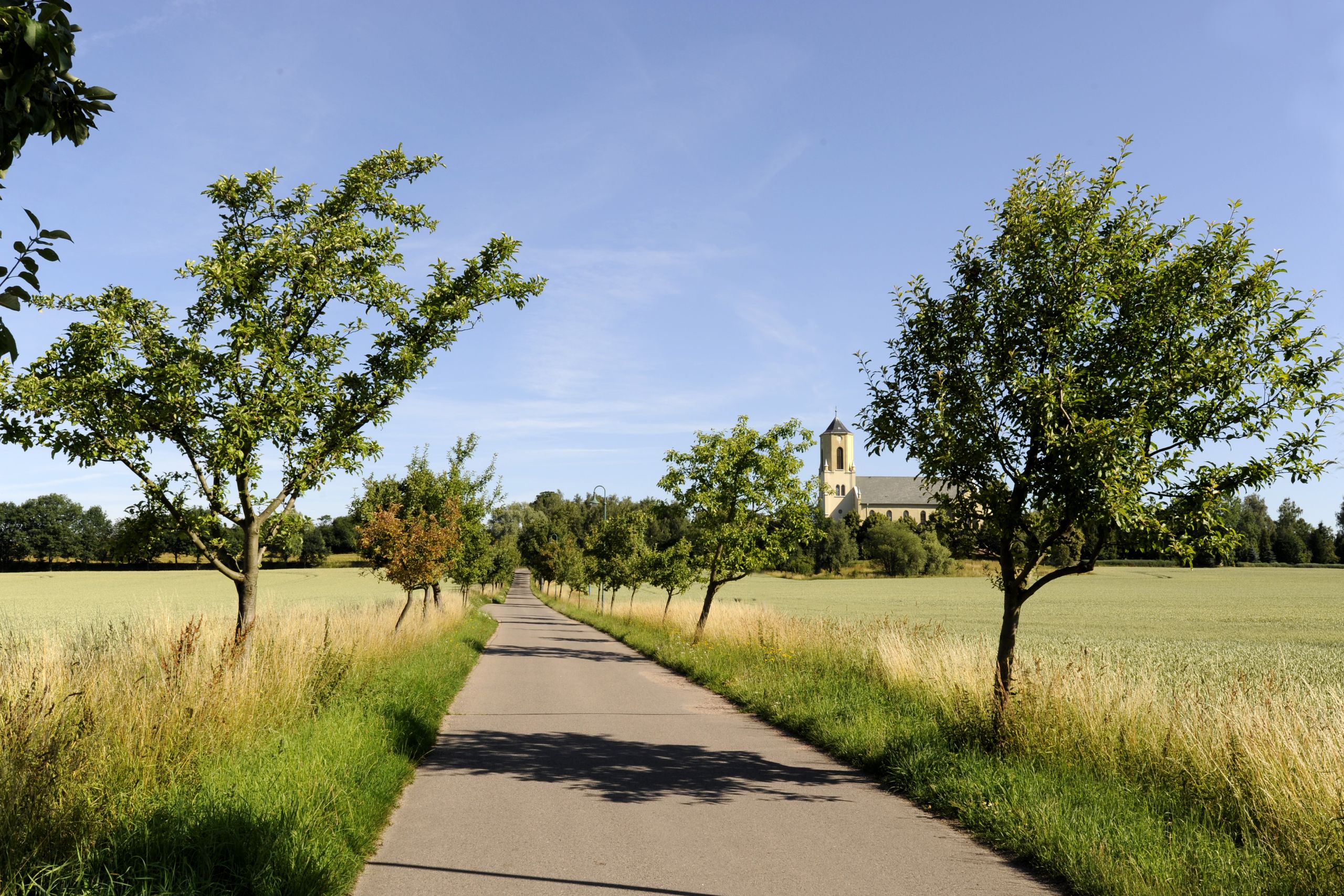
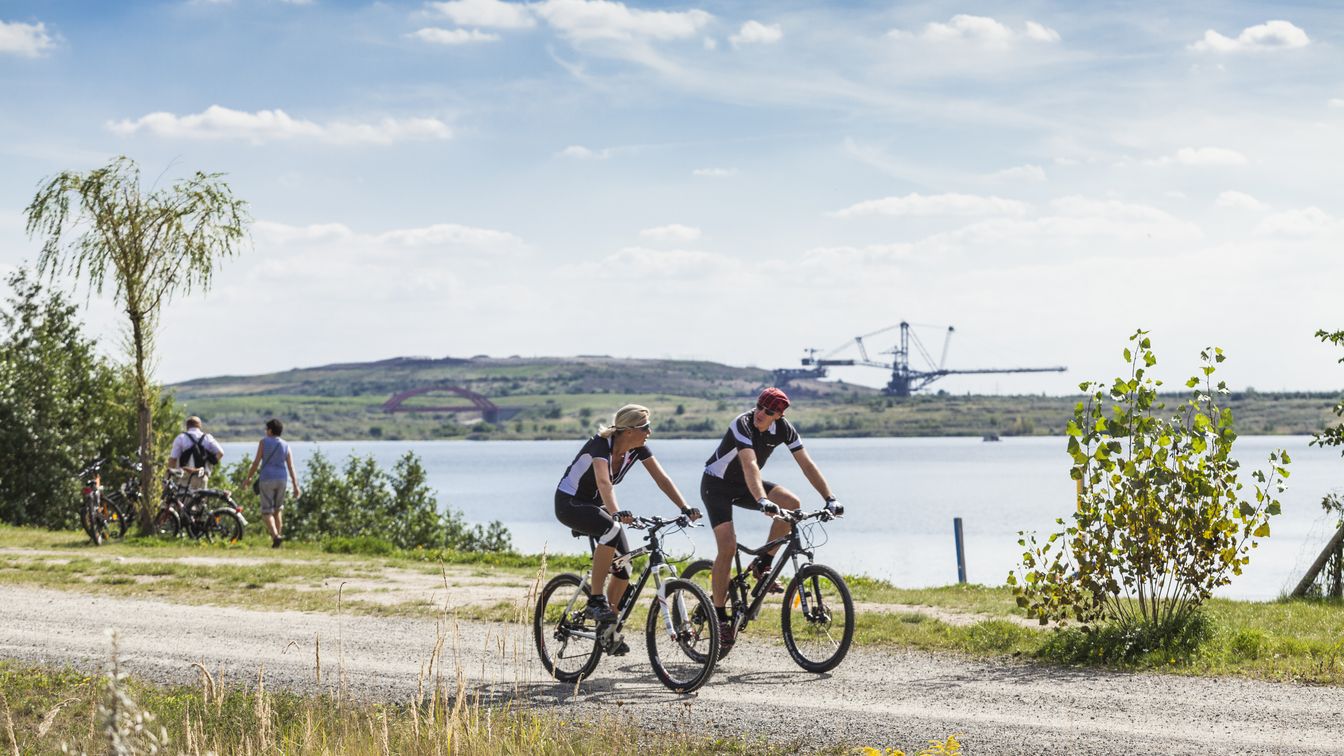
Radweg der Obstland-Route bei Leisnig, Kirche Polditz im Hintergrund
© www.siesing.de, Wolfgang Siesing

The ­Obstland Cycle Route lies between the towns of Dürrweitzschen, Mügeln and Leisnig. You can explore it as a large “outer” circular route or in smaller stages

The main route is 58 kilometres long and runs through Saxony’s largest contiguous fruit-growing area. The circular route connects the Mulde long-distance cycle route and the regional main cycle route Döllnitz Valley Cycle Route

In addition, the Obstland Cycle Route consists of three shorter sub-routes, each dedicated to a special theme related to Obstland. The route follows existing cycle paths and cycling links on roads with low traffic volumes. All routes are fully signposted - so off you go! 

Titel und Innenseite des Obstland-Flyers zum Thema Radfahren im Sächsischen Obstland
© www.leipzig.travel, Leipzig Tourismus und Marketing GmbH

Flyer 
“Discover Obstland by Bike”

Everything about the Obstland Cycle Route, including an overview map and individual route sections, as well as themed offers and a stamp collecting activity!

Things to see along the ­Obstland Cycle Route

© Christina Witt

Plan & Navigate 
with outdooractive and komoot
 

Family tour with 
Poppy Pollenpelz

On a discovery tour with the curious bumblebee

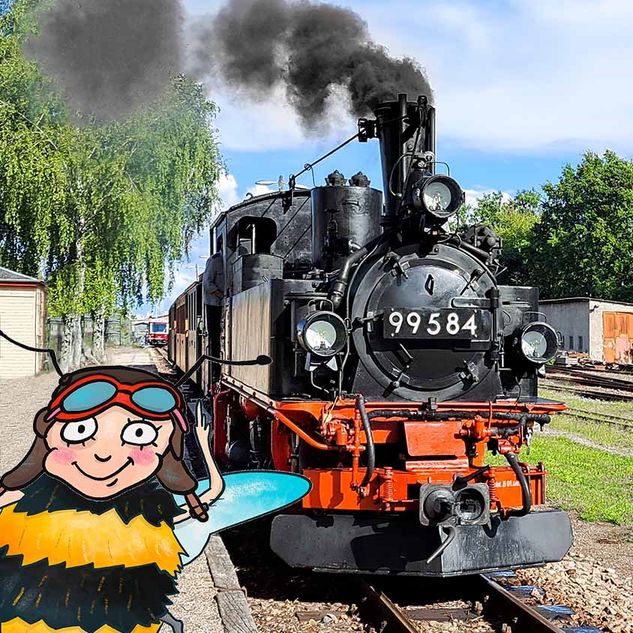
Das Bild zeigt die illustrierte Figur der Hummel Poppy vor der Döllnitzbahn "Wilder Robert"
© www.graupner-illustration.de, Sylvia und Helene Graupner

The first interactive, app-based adventure tour on the Obstland Cycle Route II introduces the history of the Saxon Fruit Region. 

In the search for the mysterious golden treasure, the region between Mügeln, Börtewitz and Kloster Sornzig becomes an adventure land for explorers young and old. Families can set off on an exciting adventure with the little bumblebee Poppy Pollenpelz on section II of the Obstland Cycle Route. 

“Poppy Pollenpelz and the Mysterious Golden Treasure” is an interactive discovery journey via the “locandy” app, where there are lots of puzzles to solve, games to play and interesting facts to learn about the Saxon Fruit Region and geological history. And anyone who finds out in the end what the mysterious golden treasure is all about can even look forward to a small reward.

The tour is aimed especially at families with children between 8 and 12 years old and can be used free of charge on your own smartphone.

Geoportal Mügeln railroad station with kaolin adventure world

Mügeln

www.tomwilliger.de, Tom Williger | AI-optimized | CC-BY

Döllnitzbahn - "Wilder Robert" narrow-gauge railroad

Mügeln

www.tomwilliger.de, Tom Williger | AI-optimized | CC-BY

Welcome to Leipzig - The podcast for your Leipzig trip

© www.rittergut-dornreichenbach.de, Enrico Ullmann

Historic Fruit Region

The origins of fruit growing in Saxony date back to the Middle Ages. Fruit, vegetables, herbs and medicinal plants were cultivated in monastery gardens as early as the 12th/13th century.

After the secularization of Marienthal Monastery in Sornzig during the Lutheran Reformation in the mid-16th century, the monastery continued to be managed as an agricultural monastery estate. Since then, the Electors of Saxony promoted Saxon fruit growing sustainably by state decree.

In 1892, Dr. Ludolf Colditz acquired the Sornzig monastery estate and established the tradition of modern orchard fruit growing here.

By 1900, Sornzig alone already had 8,340 fruit trees. An extensive tree nursery was established, which also attracted attention with new varieties. Fruit trees and fruit from Sornzig became well known and sought after throughout Germany.

After the Second World War, fruit growing in Sornzig and the surrounding area continued on a cooperative basis. In 1966, the cooperatives in Ablaß, Dürrweitzschen, Leisnig, and Sornzig joined together to form the "Sachsenobst" cooperative association. In the early 1970s, "Obstland" established itself as one of the five main fruit-growing regions between the Baltic Sea and the Ore Mountains.

Since 1991, Obstland Dürrweitzschen AG has continued the region’s more than 800-year-old fruit-growing tradition on more than 1,500 hectares of fruit-growing land. It presents its fresh and liquid fruit products under the "Sachsenobst" product brand and successfully promotes them with the slogan "This is what nature tastes like."

In "Obstland," you can still experience and enjoy the environmentally friendly and nature-oriented cultivation methods used by Saxon fruit growers on modern, large-scale plantations.

All highlights of the Obstland Cycle Route at a glance