© www.pkfotografie.com, Philipp Kirschner
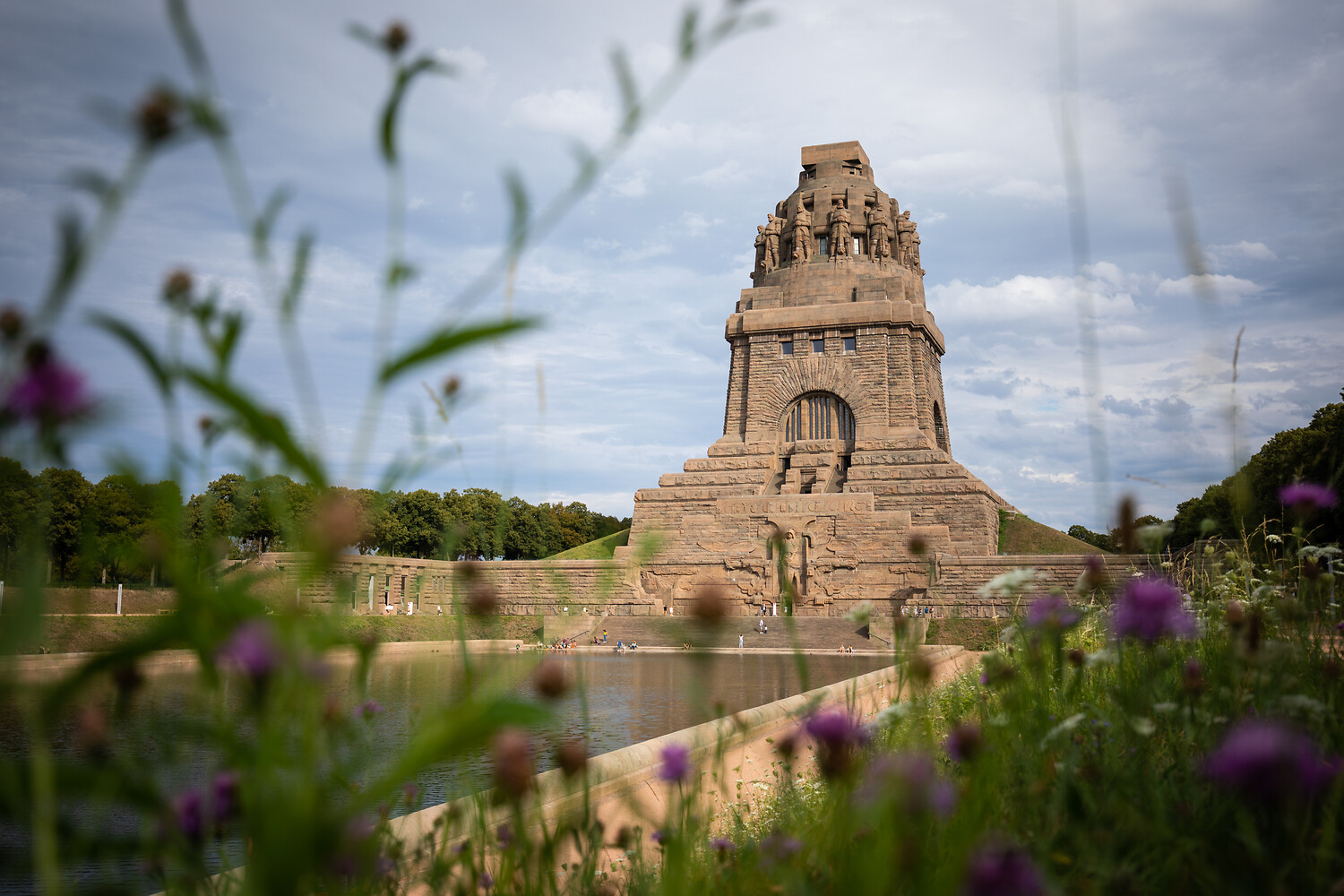
Rings um das Völkerschlachtdenkmal wachsen zahlreiche Bäume und das Areal ist parkähnlich grün.
© www.hgp-photography.com, Harald Göbl

During your visit, you should by no means overlook the beautiful and diverse architecture in Leipzig. Here, you can admire many buildings from different eras in the style of Gothic, Romanticism, the Renaissance, or modern times. 

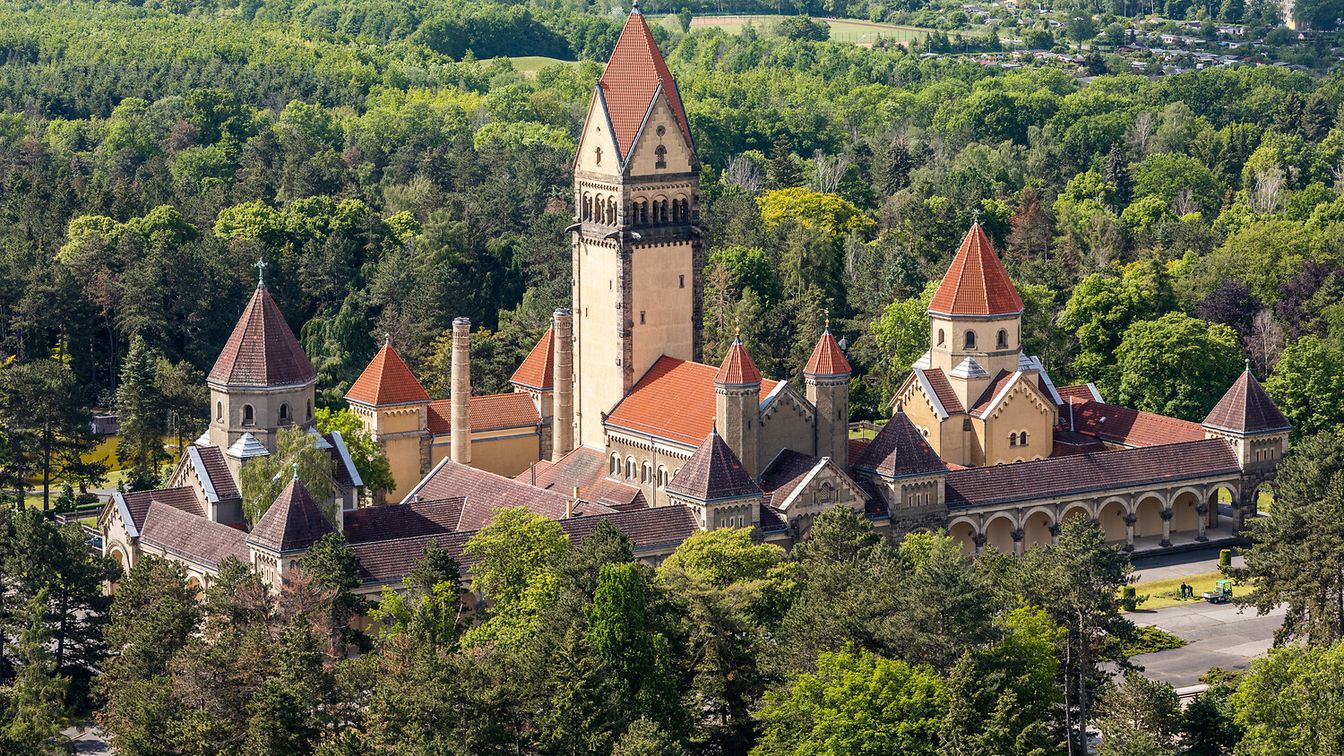
Some of them have become landmarks of the city. The City-Hochhaus stands out in particular; at 142.5 meters, it is the tallest office building in the city. The Leipzig Central Station made of sandstone and the Monument to the Battle of the Nations also play a major role in shaping the cityscape.
© www.pkfotografie.com, Philipp Kirschner

Leipzig’s architectural landmarks

Courtyards and arcades

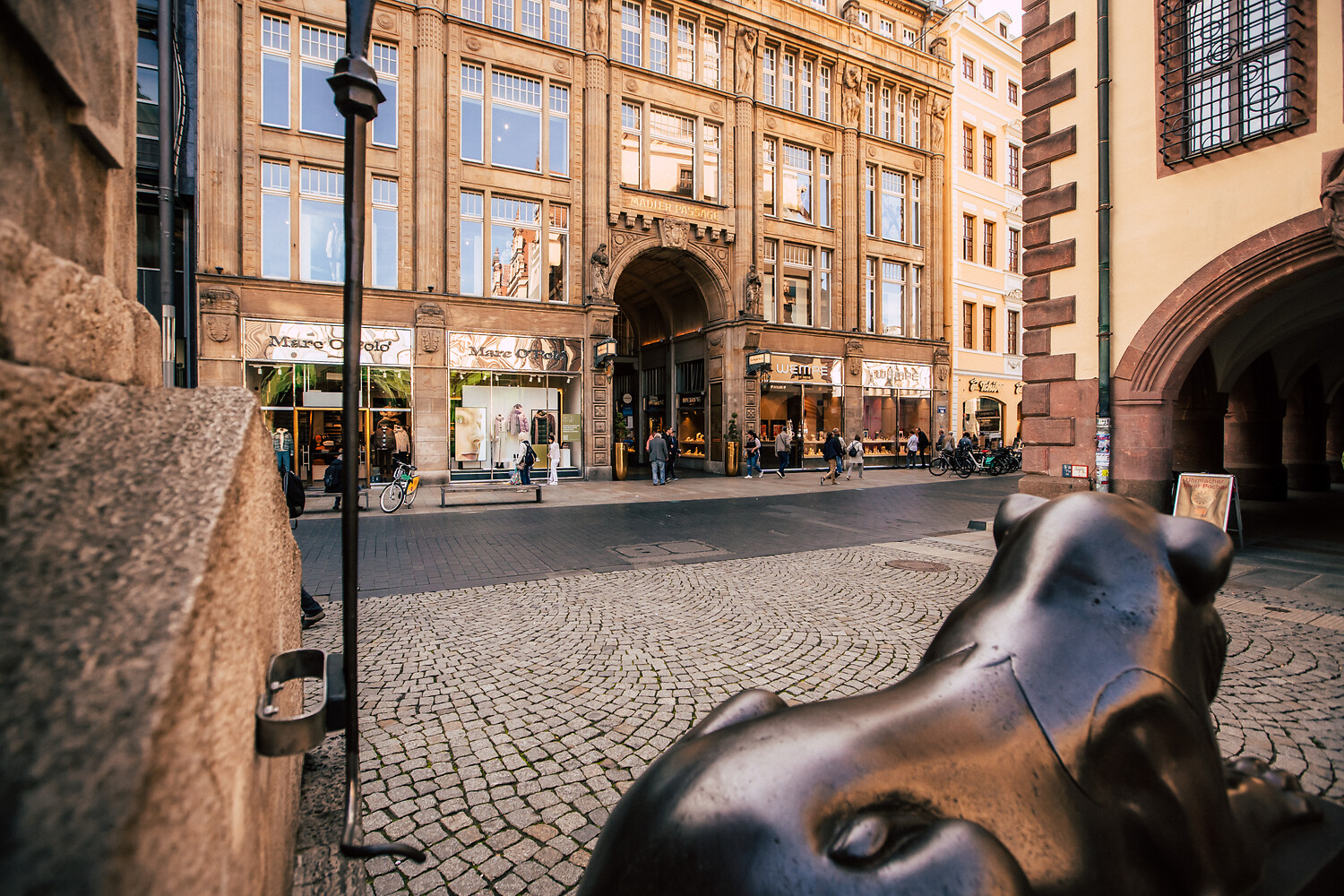
Vom Löwenbrunnen am Leipziger Naschmarkt blickt man auf den großen Eingangsbogen der berühmten Mädlerpassage
© www.tomthiele.com, Tom Thiele

A walk through the unique arcade system and the trade fair palaces recalls the centuries-old tradition as a trade fair city. For 500 years now, they have shaped the appearance of Leipzig’s city centre. Their history is closely linked to the development of the city into a rising centre of trade and fairs.

While other European cities also have many commercial arcades, only Leipzig offers such a complete system within its city centre. The size of Leipzig’s arcade system is unique in Europe. The City of Leipzig feels particularly committed to preserving this architectural uniqueness, ensuring that the historic arcades and passageways are not only maintained but even complemented by new ones.

Take a look at our page about the Leipzig city centre, where you can find details about the individual arcades.

Noteworthy arcades and courtyards

© www.pkfotografie.com, Phillip Kirschner

Travel offer for the curious

Short trip “Get to know Leipzig”

© www.pkfotografie.com, Philipp Kirschner

Founding Era

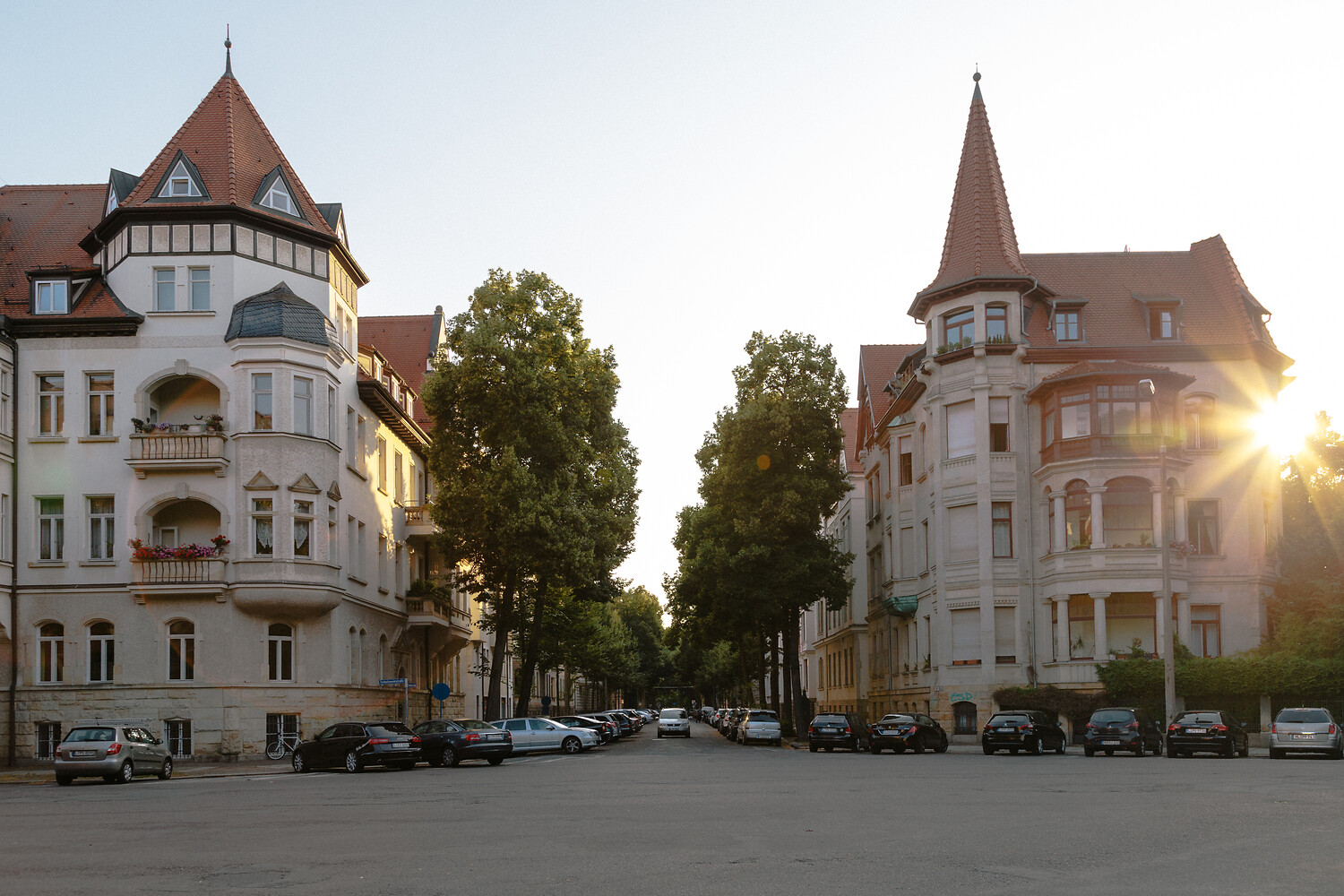
Zwei sich gegenüberliegende Häuserecken des Waldstraßenviertels in Leipzig sind mit Erkern und Türmen ausgestattet
© www.pkfotografie.com, Philipp Kirschner

With more than 15,000 cultural monuments – including 80 percent Gründerzeit-era buildings – Leipzig is Germany’s monument capital and boasts the greatest quantitative and qualitative wealth of Gründerzeit and Art Nouveau architecture. During the Gründerzeit, shaped by widespread industrialisation and an economic boom, the city experienced a true building boom. Impressive residential districts emerged, such as the Waldstraßenviertel, the Musikviertel and the popular Südvorstadt, along with buildings such as the Michaeliskirche and the New Town Hall.

With the influx of people during industrialisation, the demand for housing increased. The Gründerzeit responded with standardised development plans and privately financed rental housing construction. A social mix in the newly emerging residential districts was ensured by placing shops and merchants’ apartments in the front buildings, apartments for employees on the upper floors, and workers’ quarters in the rear courtyards.

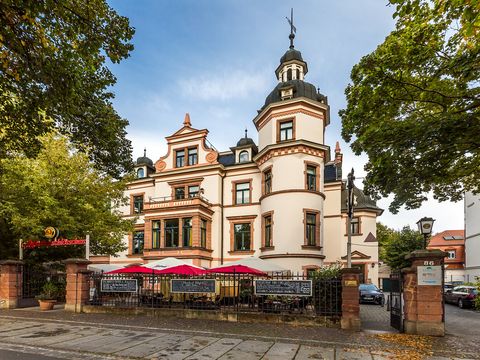
Das Mückenschlösschen im Leipziger Waldstraßenviertel ist ein markantes Gebäude der Gründerzeit mit seinen Stuckverzierungen, Erkern und dem Eckturm
© www.pkfotografie.com, Philipp Kirschner

A dazzling example of masterful residential construction from the period of Leipzig Historicism is the Waldstraßenviertel, located northwest of the city centre. The name Waldstraßenviertel derives from its location – it is situated on both sides of Waldstraße. Thanks to its proximity to the Rosental, the Waldstraßenviertel was particularly popular as a residential area for the wealthy bourgeoisie.

The tasteful buildings of Late Classicism, Historicism, and Art Nouveau continue to shape the appearance of the Waldstraßenviertel to this day. Especially impressive are the richly decorated street façades, the numerous preserved and restored ornaments, as well as the painted entrance halls and foyers. Around 550 houses belong to the Waldstraßenviertel, most of which are listed buildings.

Due Luftbildaufnahme zeigt Häuser im Leipziger Musikviertel im typischen Gründerzeitstil, im Hintergrund treten das Bundesverwaltungsgericht, das Neue Rathaus und das City-Hochhaus markant hervor
© www.tom-schulze.com, Tom Schulze

The Musikviertel is located southwest of the city center. The name refers to the musical institutions built in the district, including the second Gewandhaus (1884) and the Royal Conservatory of Music (1887). Numerous streets in the neighborhood were named after composers.

Magnificent buildings such as the Bibliotheca Albertina, the former Imperial Court of Justice, and the Academy of Fine Arts Leipzig can be admired in the Musikviertel. In addition, residences for the affluent bourgeoisie were constructed. Architecturally impressive are the Roßbach House, built in 1892/93 based on a design by Arwed Roßbach, as well as the villas on Karl-Tauchnitz-Straße, 13 of the original 32 of which are still preserved. The villa plots were generously planned and offered space for front gardens and coach houses. Thanks to its proximity to Clara-Zetkin Park and the Auenwald forest, the area provides excellent living conditions.

Im Herbst färben sich die Bäume entlang der Karl-Liebknecht-Straße bunt.
© www.pkfotografie.com, Philipp Kirschner

The Südvorstadt district stretches between the city centre and the Connewitz neighbourhood. Because of its proximity to the centre and the trendy Karl-Liebknecht-Straße, it is favoured by young people. This generously designed residential area has a large number of historicist and Art Nouveau buildings.

In addition to Karl-Liebknecht-Straße and the parallel Kochstraße, August-Bebel-Straße is particularly striking in urban design terms. Laid out after 1870 as a 34-metre-wide boulevard between Richard-Lehmann-Straße and Mahlmannstraße, it is considered one of Leipzig’s most splendid residential streets. Many villa-like rental houses with tranquil front gardens have been preserved. Shops were not permitted on this street.

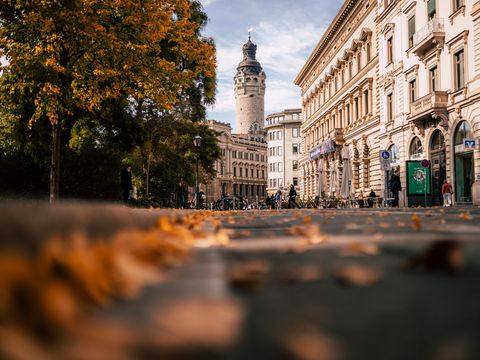
Die Schillerstraße führt direkt auf das Neue Rathaus zu.
© www.tomthiele.com, Tom Thiele

Schillerstrasse, which borders Petersstrasse, is considered one of the grand streets of Leipzig’s historicist period. Architecturally impressive are the residential and commercial buildings at Schillerstrasse 3 to 6, which were constructed between 1861 and 1863 as a continuous row. Characteristic details of these buildings include round-arched windows, natural stone cladding, relief friezes, and straight rooflines. Opposite the building ensemble is a landscaped garden designed by the Prussian garden artist Peter Joseph Lenné, which was inaugurated on 10 November 1859 to mark the 100th birthday of Friedrich Schiller. The Lenné complex, known to Leipzig’s residents as Schillerpark, is especially appreciated by students as an oasis in the midst of the bustling city center.

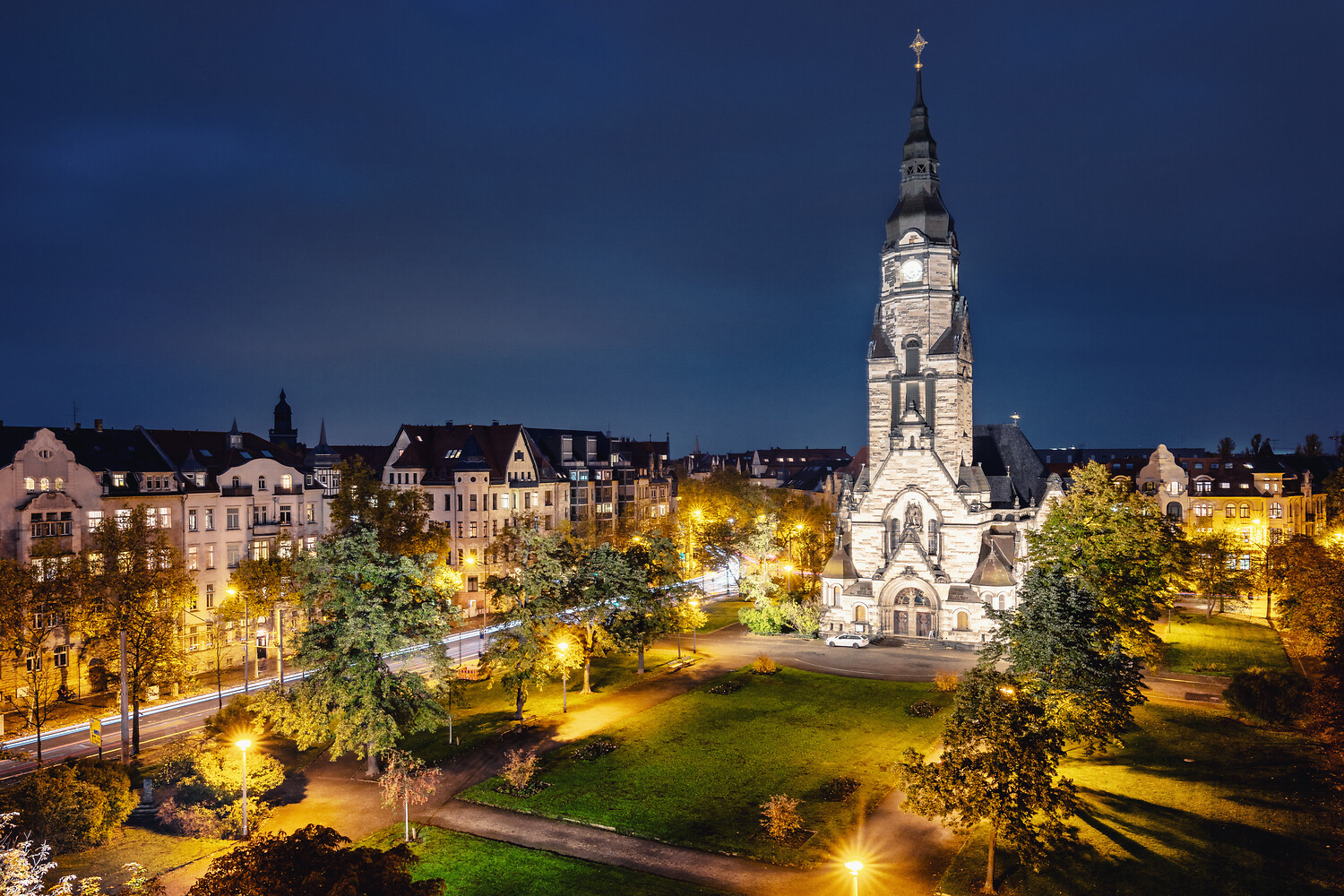
Die Michaeliskirche am Nordplatz in Leipzig leuchtet hell in einer Sommernacht
© www.pkfotografie.com, Philipp Kirschner

Nordplatz, located near the zoo and featuring an impressive ensemble of historic buildings, is considered one of the most beautiful square designs from the Wilhelminian era (1890–1918). At the intersection of several visual axes stands the Michaelis Church with its church tower, which is around 70 metres high.


The first building constructed on the square was the residential building at Nordplatz 1, built between 1888 and 1890 in the Neo-Baroque style. It also marks the end of Nordstraße, which leads from the city centre to Nordplatz. More splendid historicist buildings follow, including the residential building Nordstraße 2, built in the Neo-Renaissance style, as well as the corner building Nordplatz 3, constructed in 1904/05.

Welcome to Leipzig – The podcast for your Leipzig trip

Buntgarnwerke, Federal Administrative Court, “Völki” & more

All episodes
© www.pkfotografie.com, Philipp Kirschner

Industrial architecture in Leipzig

Across all of Leipzig, you can explore the buildings from the defining era of industrialisation. In addition to large-scale industrial buildings in the west of Leipzig, the Alte Messe site in the east and the 170-year-old Kulturfabrik WERK2 in the southern district of Connewitz are also among the monuments of industrial culture.

A special highlight: the 90-hectare architectural monument of industrial design in the trendy district of Plagwitz! This district was the first systematically developed large-scale industrial area in Germany. Closely linked to the history of Plagwitz, entrepreneurial activity was significantly shaped by Dr. Carl Erdmann Heine (1819–1888). Thanks especially to his commitment between 1840 and 1880, Leipzig became a pioneer of German industrialisation.

Preserved buildings of industrial culture

Art and cultural centres

After the successful renovation and repurposing of the former Gründerzeit buildings, you can now admire many magnificent brick buildings in the west of Leipzig.

The Spinnerei, once the largest cotton mill in Europe, now offers an enormously wide range of opportunities for art lovers while remaining the creative home for Leipzig’s artists. Want to discover more industrial buildings with unique charm? You will also find them in the neighboring district of Lindenau, where, among others, the Tapetenwerk and the Kunstkraftwerk are waiting for your visit. 

  • 170 years of the cultural factory WERK 2

  • 100+ artist studios in the Spinnerei

  • 8 factory buildings for artists in the Tapetenwerk

Modern Architecture

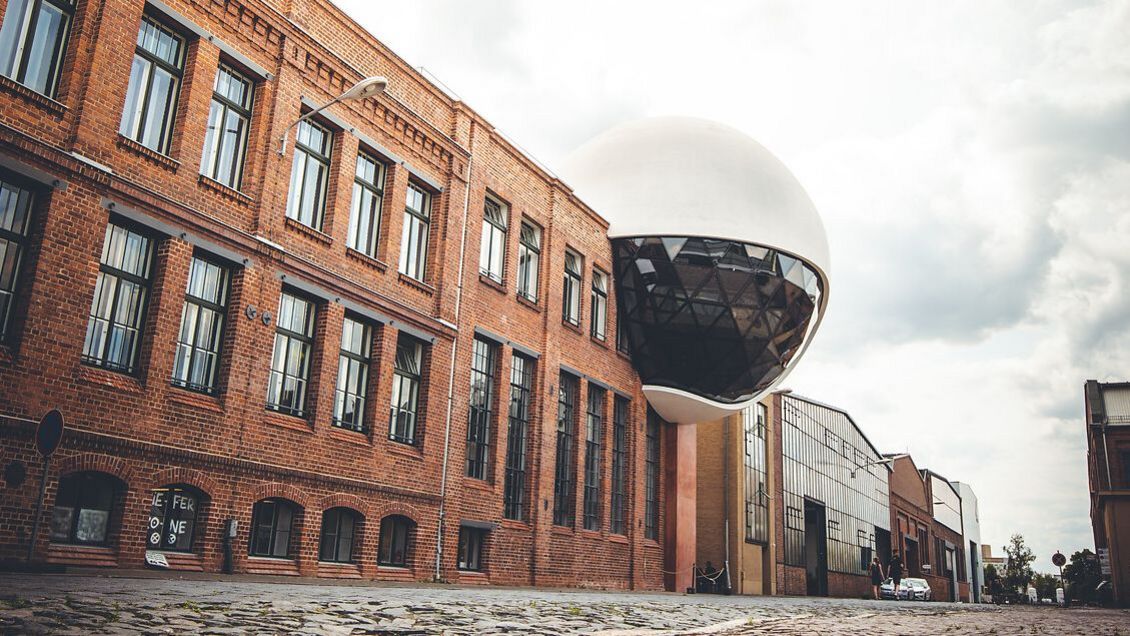
Die Oscar Niemeyer Sphere in Leipzig zeichnet sich durch eine gigantische weiße Kugel aus, die aus einem roten Backsteinbau ragt
© www.hgp-photography.com, Harald Göbl

The most impressive examples of contemporary architecture can be found in the city's industrial buildings. Instead of creating stopgap solutions, investors sought out renowned architects and created sophisticated buildings that reflect the spirit of the times. A highlight is the new Leipziger Messe. Designed by Gerkan, Marg and Partners, it was conceived in April 1996 as a state-of-the-art exhibition and congress center.

Architecturally unique are the production sites of Porsche and BMW, which opened in 1999 and 2005. The new building of the Museum of Fine Arts Leipzig has shown since 2005 that contemporary architecture can offer an exciting contrast. But the new buildings of the University, the German National Library and the MDR also express the self-confidence of a rising city.

Innovative design

Museum of Fine Arts

Leipzig

www.pkfotografie.com, Philipp Kirschner | AI-optimized | CC-BY

Experience Leipzig off the beaten path!

Drei junge Menschen sitzen entspannt mit Getränken in der Hand am Westwerk auf der Karl-Heine-Straße im Leipziger Szeneviertel Plagwitz
© www.pkfotografie.com, Philipp Kirschner

There is plenty to discover in Leipzig beyond the city center as well! With the “Leipzig Beyond” tours in the Explore Leipzig App, you can explore the city’s trendiest neighborhoods and experience districts off the beaten path. Can’t decide? No problem – with the help of a slot machine or the “Leipzig Beyond Matching,” you’re sure to find the perfect tour for your visit to Leipzig! Architectural highlights from past and modern times can be found throughout the city.

Download the app now and start your tour!

All tips on architecture in Leipzig